Get a FREE marketing audit and discover what's holding your practice back from reaching its full potential.
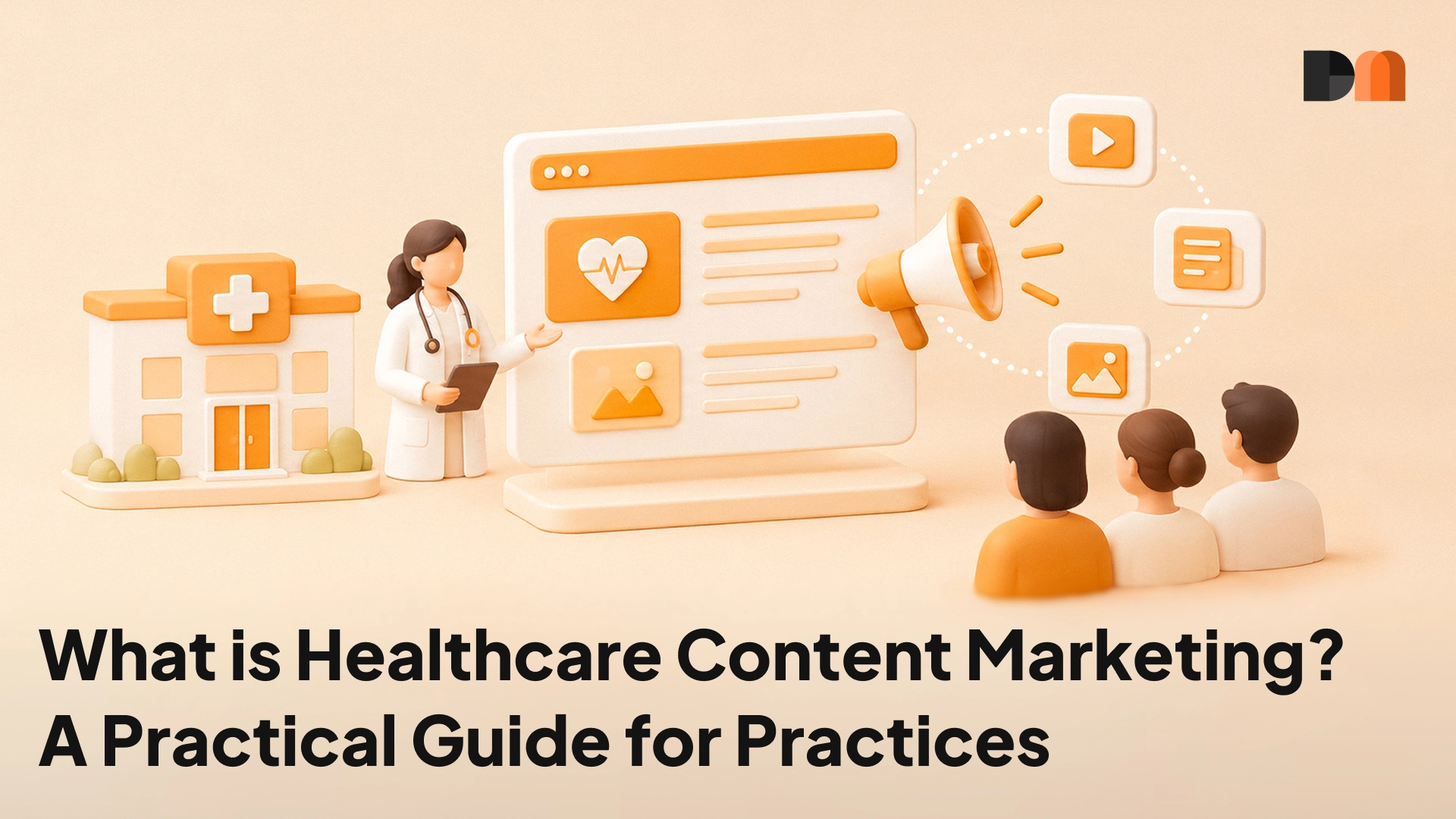
Patients love reading healthcare trivia online and self-diagnose their symptoms long before they sit in your exam room. According to the CDC's National Center for Health Statistics, 58.5% of U.S. adults used the internet to look for health or medical information in the second half of 2022. Some of the healthcare content they find online is accurate, while much of it is not. Healthcare content marketing helps you tell the difference. When your practice publishes clear, trustworthy information, you become the source patients turn to before, during, and after a visit. This guide explains what that looks like, why it matters, and how to build a content marketing plan customized for your practice.
Healthcare content marketing is the practice of creating helpful information for patients and sharing it where they already spend time. That might be a blog post explaining a common condition, a short video of a provider walking through a procedure, an FAQ page about insurance, or a monthly email with seasonal health reminders.
The goal is to educate, answer questions, and show patients who you are. You can run social media ads within your marketing budget to promote well-researched content written by your clinic. A well-written article on your website can also answer patient questions for years. This type of content promotion gives search engines a reason to show your practice when people look for help and establishes it as a credible healthcare information provider. Our guide on SEO for fertility clinics shows how this works in one specialty, and the same idea applies to almost every type of practice.
Content is considered king in marketing. It does so much for a practice over time. It builds trust among patients who want to understand their care, and practices that explain things well earn confidence before the first appointment. Google also treats health topics with extra care. Its guidance on creating helpful, reliable, people-first content says its systems give more weight to content that shows experience, expertise, authority, and trust when a topic can affect someone's health.
It also helps the patients you already have. Clear aftercare instructions, prep guides, and answers to common billing questions mean fewer confused phone calls and fewer missed appointments. Patients who feel informed are more likely to come back, follow their care plans, and recommend you to friends and family.
Content also shapes your reputation in your community. Referring physicians, local employers, and even job candidates look at your website and social pages. A practice that shares useful, up-to-date information looks organized and caring, which helps with everything from referrals to hiring.
Dr. Rima Sanka, D.O., of AAAC put it this way after working with our team:
"They provided a thoughtful, strategic approach to marketing that went beyond simply increasing visibility. They helped us build a stronger online presence and connect more effectively with current and prospective patients."
You don't need a big budget or a full marketing department to get started. A simple healthcare content strategy starts with a few honest questions.
If your practice has more than one office, plan for location pages and local details from the start. Our article on marketing for multi-location practices covers how to keep content consistent while still speaking to each community distinctly.
Once you have answers, put them on a simple calendar. A spreadsheet with topics, owners, and due dates is enough to keep everyone on track. Planning ahead also gives providers time to review content before it goes live, which one of our clients values most about DrCatalyst Marketing.
"The marketing team contacts us with drafts of different holiday marketing drafts for the many different themes. We are able to review those and make a decision." Dr. Hargrove-Brown, CEO, Rural Health Network
With your plan in place, these healthcare content marketing strategies will help your content earn attention and trust.
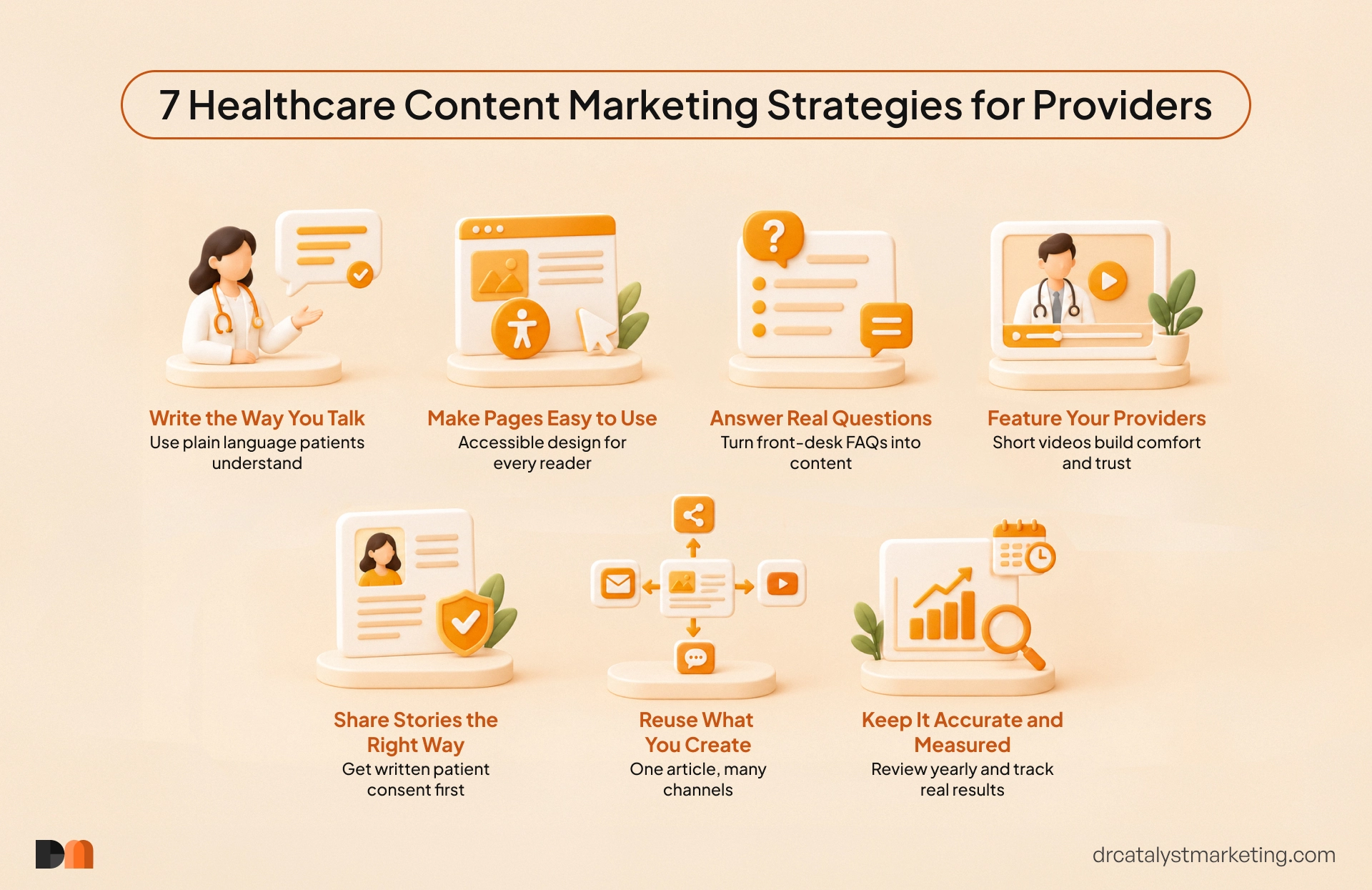
Medical terms make sense to you, but they can quickly lose patients. The CDC's plain language guidance recommends putting the most important message first, using words your audience knows, and keeping to one idea per sentence. Read your draft out loud. If it sounds like a journal article, simplify it.
Tone matters as much as accuracy. Dr. Tushar Patel, M.D., of CMC Fresno shared that DrCatalyst Marketing’s team was "effectively nailing the tone and messaging that align with pediatric practice and patient demographics." Content that sounds like your practice feels familiar to patients long before they meet you.
Content only helps if patients can read it. That means good contrast, readable fonts, descriptive image text, and pages that work with screen readers. Writing accessible website content also protects your practice as accessibility rules for healthcare websites get stricter.
Your front desk hears the same questions every week. Turn them into blog posts and FAQ pages. "How long does recovery take after knee surgery?" or "What should I bring to my first allergy appointment?" are topics patients search for, and they make natural supporting pages for your main service pages.
Patients choose people, not logos. Short videos of providers introducing themselves, explaining a procedure, or answering a common question help patients feel comfortable before they arrive. Keep videos to two or three minutes and post them on your website, YouTube, and social channels.
Real stories are powerful, but they come with rules. Under HIPAA, practices generally need a patient's written authorization before using their health information for marketing. Always get signed permission before sharing a testimonial, photo, or case story.
One good article can become a social post, an email, a short video script, and a handout for the waiting room. Repurposing saves time and helps your message reach patients wherever they prefer to read. Seasonal posts and timely topics keep your channels fresh, too.
Health information changes, so review your key pages at least once a year and note who reviewed them. Then look past page views. Track appointment requests, calls from your website, time spent on pages, and the questions patients mention at check-in. Those numbers show whether your healthcare content marketing is actually helping patients.
Many practices start content marketing on their own and later find it hard to keep up between patient care and daily operations. That is normal. If you are weighing outside help, our list of the best medical SEO agencies explains what to look for, from healthcare experience to clear reporting.
At DrCatalyst Marketing, we have spent more than 12 years helping 200+ practices across 40+ specialties build content that educates patients and increases their trust. This has led to 1 million patient leads generated along the way. We start by listening, learn how your practice works, and build every healthcare content strategy around your specialty, your patients, and your goals. From solo practices to multi-location clinics, our approach stays ethical and grounded in the realities of healthcare.
Healthcare content marketing is an important way for a practice to promote itself to the outside world. It shapes how you educate patients, earn credibility, support the people already in your care, and build a lasting reputation. Start small, write clearly, stay consistent, and keep patients at the center of every piece you publish. Over time, that steady effort becomes one of the most valuable assets your practice owns.
Every specialty has its own patient journey. We know the difference between how someone searches for a fertility clinic and how they find urgent care.